If you operate in aviation support, retail, building, social work, or you merely take care of household and neighbors, understanding how to act in an emergency changes results. Jandakot rests within a busy rural and commercial catchment, with little airport terminals, workshops, and homes interwoven. That makes accessible, useful first aid and CPR training important. This overview clarifies what to anticipate from a first aid and CPR course Jandakot, just how to select the right supplier, what abilities you will certainly entrust, and how to preserve competence over time.
Why regional training matters
Training that really feels remote or academic rarely sticks. When the teacher understands local dangers, work environment standards, and normal call-out scenarios, learning ends up being right away beneficial. In Jandakot that means trainers that reference airplane ramp events, chemical exposure from tiny workshops, heat-related issues throughout hot months, and responses ideal for residential roads with variable ambulance action times. A course that uses instances you may in fact see assists students remember the sequence of activities and the reasons behind them.
What a typical first aid and CPR course in Jandakot Look at this website covers
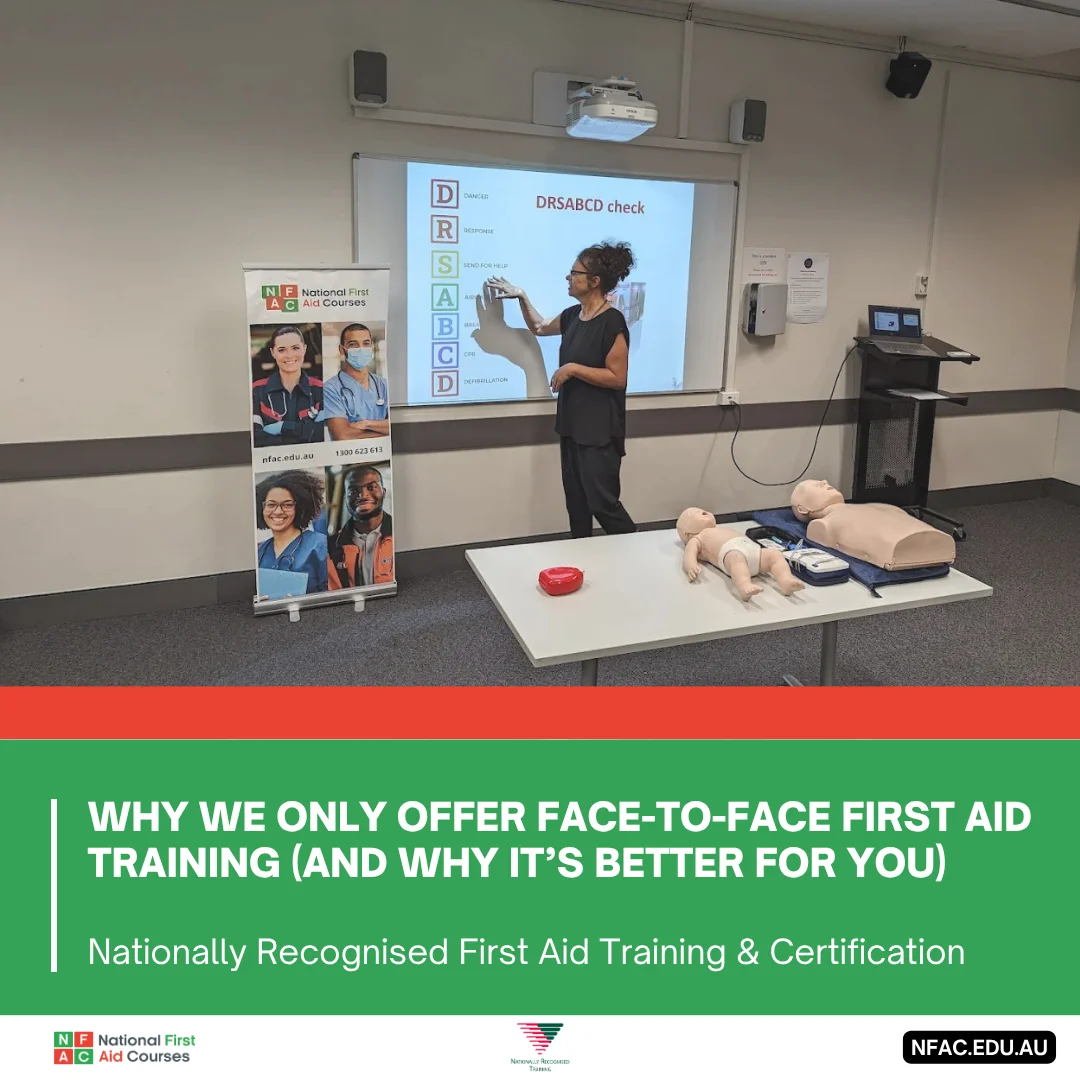
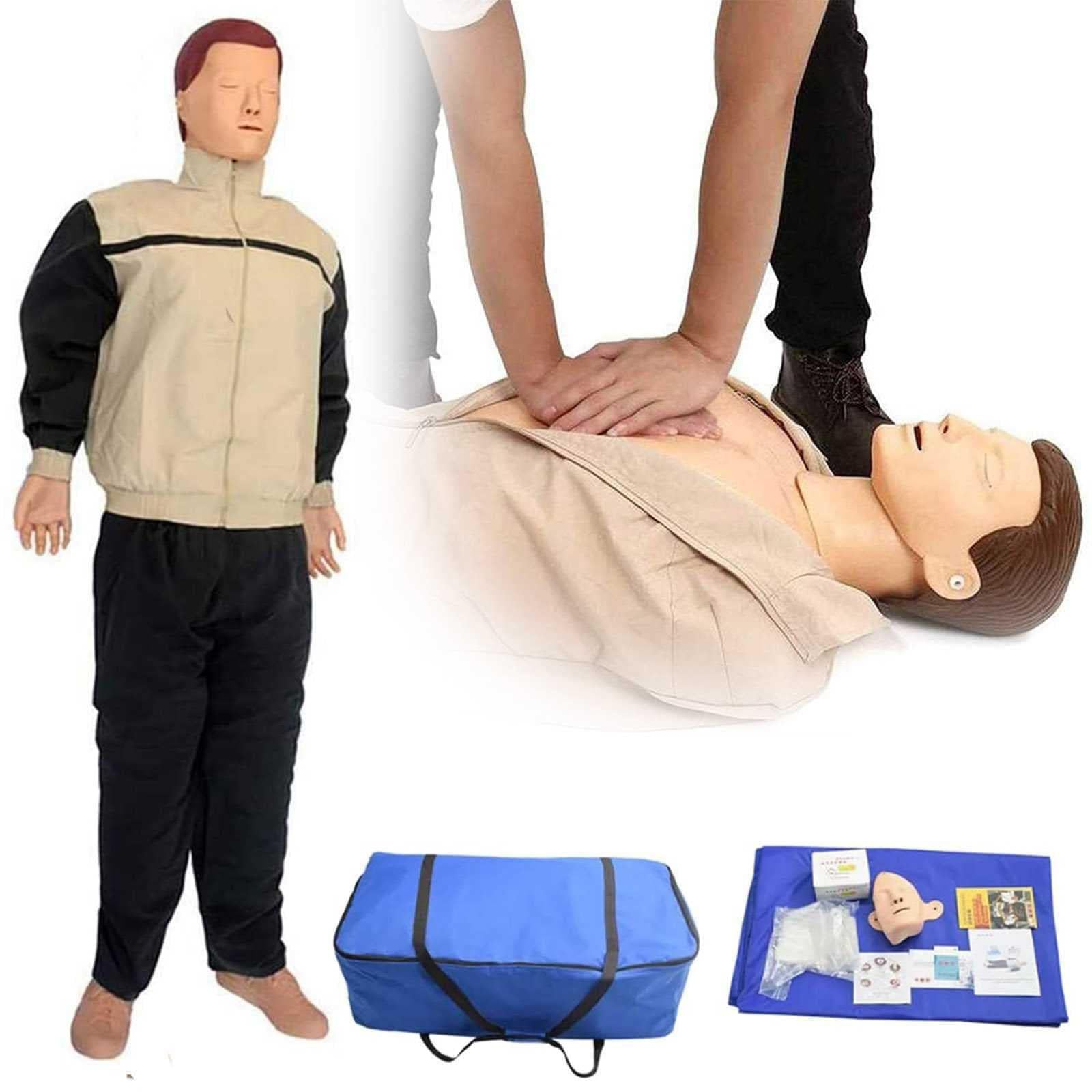
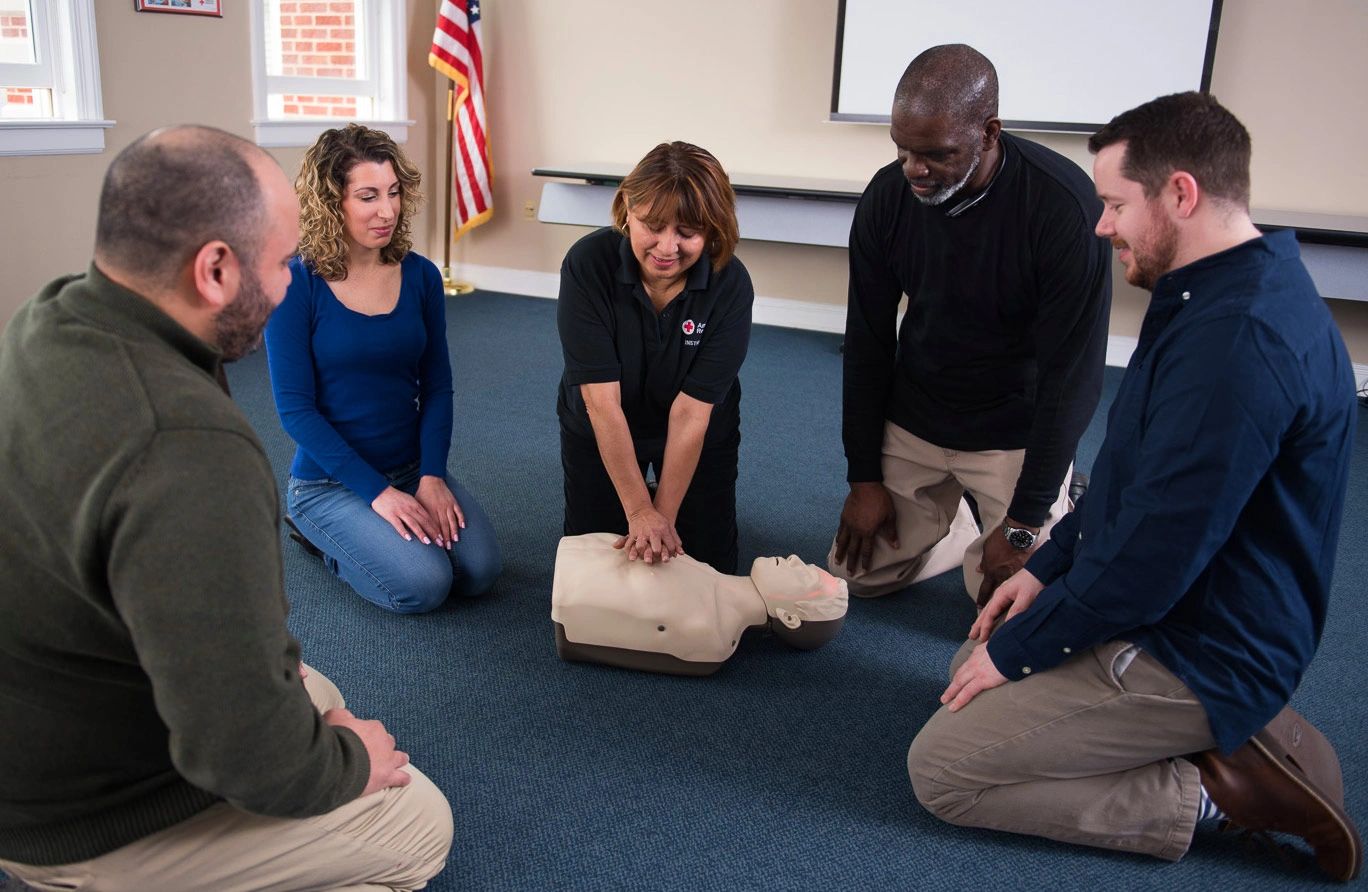
Courses differ by provider and qualification level, but a strong first aid and CPR course Jandakot will combine hands-on practice with scenario-based understanding. Anticipate modules on adult CPR, child and infant CPR where appropriate, use of an automated outside defibrillator or AED, monitoring of choking, treatment for bleeding, burns and cracks, recognition of stroke and cardiovascular disease, shock monitoring, and basic wound care. Practical sessions will require repetitive, supervised technique of compressions and air flows on manikins till technique is correct.
Providers frequently straighten training to country wide recognised devices, so companies can rely on the certificate. For workplace conformity, search for courses that map to the across the country identified unit HLTAID011 Provide first aid or its current matching, and HLTAID009 Supply cardiopulmonary resuscitation. If you require a greater level of clinical first aid, some service providers provide HLTAID012 Provide First Aid in an Education and Treatment Setup or tailored courses for high-risk industries.
How long the courses take and how they are delivered
A typical mixed first aid and CPR course will typically compete one complete day, approximately 6 to eight hours, consisting of breaks. Shorter refresher course sessions exist for people who currently hold a current certificate; those often run a couple of hours to renew CPR competence and change essential first aid abilities. Online theory followed by an examined in person useful session is an usual style. That blended method lets you full knowledge checks at your very own speed while making certain hands-on skills are analyzed in person.
What you will actually have the ability to do after the course
Completing a first aid and CPR course in Jandakot ought to leave you with certain, practical skills: you will have the ability to execute efficient breast compressions and rescue breaths, operate an AED, control extreme bleeding using straight stress and dressings, immobilise believed cracks, identify and act on stroke or heart attack indications, and deal with burns and small injuries. Notably, you must also get assessment abilities: exactly how to prioritise risks, call for help effectively, and offer a concise handover to emergency situation services. Those soft abilities often make the most difference when multiple injuries exist or when the scene is dynamic.
Choosing the ideal service provider: what to ask and watch for
Not every first aid course is equal. Ask possible service providers the adhering to when you call them:
- whether their certificates map to nationally acknowledged systems and which ones the ratio of students to trainer throughout practical sessions whether functional analysis is in individual or on-line only whether AEDs and authorities or ambulance scenarios are consisted of in practice whether they supply workplace or team training at your site
A training session with a high student to trainer ratio will restrict hands-on technique. For CPR skills, aim for a sensible proportion no larger than 8 students per instructor. Examine that manikins and AED fitness instructors are in excellent condition. A great teacher will emphasise technique over memorizing actions, right pose to avoid rescuers' exhaustion, and how to adjust compressions for youngsters or people with bigger bodies.
What to bring and functionalities on the day
Arrive ready and comfortable. Bring evidence of identification if you need an official certificate, put on loosened clothing appropriate for practical job, and bring a light lunch. If the carrier enables on-line pre-course analysis, complete that prior to attending.
Checklist for participating in a first aid and CPR course Jandakot
- proof of identification for qualification purposes comfortable garments appropriate for stooping and moving any office kinds your employer needs for training records completed pre-course theory if used online payment verification or employer authorisation if required
Real-world examples that reveal the value of training
A pal who functions airside when defined tipping off the tarmac to a co-worker who had broken down. Trained team promptly examined responsiveness, called for emergency situation services, placed the person supine, and commenced CPR while one more retrieved an AED from a nearby car. Because those -responders had practised compressions under timed circumstances throughout their first aid training, they rotated rescuers every two minutes to prevent exhaustion. Emergency situation solutions reported the rapid handover and use an AED when they got here. That person survived and returned to work months later.
A local childcare educator I trained with shared a various tale. Throughout an early morning session a young child stumbled and experienced a deep laceration. The educator used a straightforward stress clothing shown throughout the course, maintained the child tranquility, and interacted the incident clearly to the moms and dad and emergency situation personnel. The injury was stitched however the swift, calm feedback prevented higher blood loss and minimized distress. Stories like these highlight that the most crucial ability is the capacity to stay methodical under anxiety, something well-designed first aid and CPR courses develop with drills and scenario practice.
CPR method and typical blunders to avoid
Good CPR has to do with depth, rate, and marginal interruptions. Aim for breast compressions at a rate of concerning 100 to 120 compressions per minute, pressing to a depth of around 5 to 6 centimetres in adults. Let the upper body recoil entirely in between compressions so the heart refills. Avoid the usual errors of superficial compressions, stopping too long to inspect pulse, or pushing only with the wrists. If you are the rescuer without breath training or throughout a transmittable condition problem, continuous upper body compressions alone are better than doing nothing.
Step-by-step emergency CPR sequence
Check responsiveness and call for help, activating emergency situation services Open the air passage and evaluate breathing for up to ten seconds If not breathing generally, start chest compressions immediately After 30 compressions, provide 2 efficient rescue breaths if trained Continue cycles and utilize an AED as soon as it is availableRecognising limitations and when to call an ambulance
A typical inquiry from trainees is when to rise. If there is any type of uncertainty concerning the extent of an injury, telephone call emergency situation solutions. Considerable bleeding that soaks with a clothing, airway compromise, altered awareness, believed spinal injury with neurological indicators, indications of stroke, upper body pain with sweating and queasiness, and breathing difficulties are all factors to call 000 right away. Also if you are handling the immediate trouble, advanced treatment is typically required. First aid is a bridge to expert treatment, not a replacement.
Refresher training and keeping competence
Skills degeneration is actual. Research studies and practical experience show that breast compression quality reduces within months without practice. For workplace compliance, certifications frequently last three years for first aid and one year for CPR, yet that does not indicate skills remain sharp for that whole duration. Consider a CPR correspondence course Jandakot every six to twelve months if you are likely to be the assigned rescuer. Short, focused practice sessions with comments on compressions and ventilations assist maintain muscular tissue memory.
Custom and advanced choices in Jandakot
Many training organisations offer bespoke courses for industries such as aeronautics, hospitality, or childcare. If your work environment has specific dangers, customized web content can include chemical direct exposure feedback, utilizing oxygen treatment tools, or detailed evacuation rehearsals. Some companies also provide a sophisticated first aid course that consists of intravenous access understanding, advanced bleeding control with tourniquets, and expanded casualty evaluation. If your work environment needs specific documents, ask for a tailored course that produces certain reporting themes or event documentation forms.
Cost and qualification considerations
Prices vary depending on whether you attend a public open course or set up on-site training for a group. Expect to pay from moderate to greater arrays depending upon features, an acknowledged national system of proficiency, and whether products are included. Group reservations commonly lower per-person cost. Always check that the certificate is released by a Registered Training Organisation if you call for country wide identified certification. For casual learners who require a non-accredited alternative, community first aid sessions might be less costly yet will certainly not count for work environment compliance.
How to prepare psychologically and psychologically genuine incidents
Training covers physical actions, however the psychological part is commonly overlooked. A reliable course will certainly consist of stress and anxiety vaccination via realistic circumstances that introduce noise, time stress, and numerous casualties. Practising a short manuscript for calling emergency situation services and concise statements for spectators decreases screwing up during an actual event. Emotionally rehearsing the top priorities of security, breathing, blood loss, and calling for help installs a trustworthy choice tree. After a significant incident, debrief with colleagues and take into consideration formal coaching if the occasion first aid course near me impacts your mental health.
Local logistics and exactly how to find a course
Search for first aid training Jandakot or cpr course Jandakot to discover neighborhood service providers. Compare course details, review evaluations, and confirm recognition of the credentials. Several providers post upcoming public course dates online and permit team reservations on company websites for comfort. If you need training outdoors company hours because of change work, ask about evening or weekend alternatives. Federal government and workplace safety bodies also note accepted training service providers in the Perth urban area.
Final decision points: what matters most
When selecting a first aid and CPR course in Jandakot, 3 variables issue most of all. First, hands-on exercise with small trainer groups to construct experienced technique. Second, nationally identified accreditation if you require workplace conformity. Third, scenario-based training that reflects regional threats so you get practical judgement, not simply rote steps. Timing and price are necessary, yet not at the expense of method time and instructor quality.
If you leave the course able to apply pressure with confidence, start upper body compressions without hesitation, run an AED, and connect clearly with emergency situation services and spectators, you have actually gained important capacity. In the worst-case circumstances, those skills shorten the void in between a case and life-saving professional care.
Where to go next
After qualification, consider these actions: routine short session every 3 to six months, maintain your workplace first aid kit stocked and noticeable, identify the nearby AED places in your neighbourhood or workplace, and motivate colleagues to train too. Cumulative preparedness develops strength. In a neighborhood like Jandakot, a couple of qualified individuals make a genuine difference when mins matter.